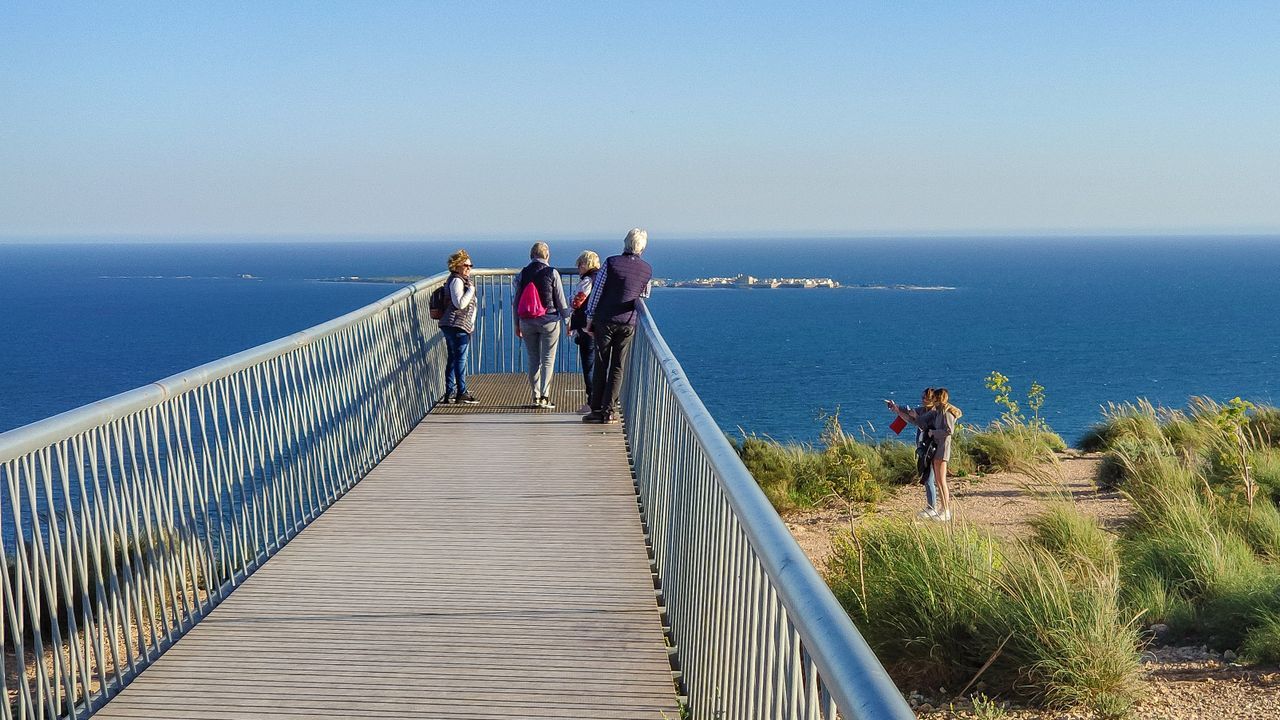
Editorial note: This guide draws on conversations with readers over 50 who have taken group trips marketed to solo travellers, and on their accounts of what the social experience was actually like — distinct from what the brochure promised. The solo travel market for older adults has grown significantly; ABTA’s Holiday Habits Report 2023 found that solo holidays were the fastest-growing booking category among over-55s. We have no affiliate relationship with any travel company mentioned. This guide is editorial — it explains how group travel works as a social context, not which company to book with.
Travel groups for singles over 50 occupy a specific space in the meeting-people landscape. They offer something local activities cannot: concentrated time with the same people in an unfamiliar setting, over multiple days, with meals, walks, and downtime shared rather than scheduled into one-hour weekly slots. If you are still deciding whether group travel is the right format for you — versus solo trips, cruises, or finding a travel companion — the broader guide to travel for singles over 50 covers that decision first.
That intensity is the appeal and the risk. A good group trip can expand your social network more in one week than months of local classes. A mismatched one can feel like an expensive commitment to company you did not choose. If you are also considering an app or a one-evening mixer, the comparison of dating apps, singles events, and travel groups makes the commitment difference explicit. For a grounded account of what the first few days actually feel like — the lobby nerves, the first dinner, the moment the group stops feeling like strangers — the story of a first singles trip after 60 describes the experience from the inside. If a full week feels like too much commitment before you know whether you enjoy the format, shorter options like day trips and weekend breaks can help you test group social travel at lower stakes first. The difference usually comes down to selection — choosing the right type of trip for your temperament and social preferences rather than picking based on destination alone.
This guide covers how singles travel groups work as social environments, what types exist, how to choose between them, and what to realistically expect from the experience.
Why Travel Groups Work for Meeting People
The social mechanics of travel groups are different from other meeting contexts in three specific ways.
Time density. A week-long trip gives you more hours with the same people than three months of a weekly class. You share breakfast, walk together, sit on the same bus, eat dinner in the same restaurant. That accumulated contact builds familiarity at a speed that local activities cannot replicate.
Shared novelty. Being somewhere unfamiliar together creates a specific kind of social openness. People tend to be more approachable, more willing to initiate conversation, and less guarded than they are in their ordinary routines. The shared experience of navigating a new place — figuring out directions, reacting to local food, commenting on the view — provides natural conversational material without requiring personal disclosure.
Removed from ordinary identity. At home, you are someone’s neighbour, someone’s colleague, someone with a known history. On a trip, you are simply a person in the group. That anonymity can feel liberating — you can be more social, more open, or more quietly observational than your daily life normally allows.
The trade-off is that travel groups are a financial commitment. They require scheduling flexibility. And unlike a local class you can quietly stop attending, a trip is a bounded commitment — you cannot easily leave if the group dynamics feel wrong.
Types of Singles Travel Groups
Walking and Hiking Holidays
Groups of 8-20 people walking a planned route over several days — coastal paths, countryside trails, national parks. Accommodation is usually in small hotels or guesthouses. Meals are shared. Walking pace and daily distance vary by operator.
These suit people who prefer side-by-side activity over face-to-face socialising. The walking provides structure and rhythm. Conversations happen naturally as you fall into pace with different people throughout the day. Evenings are social but contained — dinner together, then the option to retire early.
Cost range: £800-2,500 for a week depending on destination and accommodation level.
Cultural and Sightseeing Tours
Guided tours focusing on history, architecture, food, art, or a specific region. Groups of 10-25 people with an organised itinerary. These tend to attract intellectually curious travellers — people who value learning and discussion alongside social contact.
The social dynamic here is shaped by shared curiosity. You are looking at the same things, asking similar questions, discussing what you have seen over dinner. The intellectual scaffolding provides conversational material beyond small talk.
Cost range: £1,200-4,000 for a week depending on destination.
Adventure and Activity Travel
Cycling tours, kayaking trips, sailing holidays, photography workshops abroad. These attract people who want to do something specific together rather than simply sightsee. The shared challenge of the activity — whether physical or creative — builds camaraderie faster than passive tourism.
These groups tend to be smaller (6-12 people) and attract slightly more confident social participants. If you are comfortable with moderate physical activity and enjoy being active alongside others, these can produce strong social bonds.
Cost range: £1,000-3,500 depending on activity and destination.
Singles Cruises and River Cruises
Large-ship cruises with singles-oriented programming, or smaller river cruises with dedicated solo-traveller cabins. The social dynamic varies enormously by ship size and format. Large ships can feel anonymous; smaller river cruises (30-100 passengers) create more intimate group dynamics.
The advantage is variety — you can be as social or as private as you wish on any given day. The disadvantage is that large-ship singles events can feel like organised dating rather than organic social contact. For a direct comparison of how cruises and group tours differ as social environments, the guide to singles cruises vs group tours breaks down the structural differences.
Cost range: £1,500-5,000+ depending on duration and cabin type.
Small-Group Specialist Tours
Companies like Solos Holidays, Just You, Saga, and various Meetup-organised groups offer trips specifically designed for people travelling alone. Groups are typically 15-30, with single-occupancy rooms (no forced roommate pairing) and social activities built into the itinerary.
These are the most explicitly structured for solo travellers, which means less awkwardness about being unattached but also a more deliberate social atmosphere — everyone knows the trip is designed for people without a travel companion.
How to Choose the Right Group
The question that matters most is not “where do I want to go?” but “what kind of social environment do I want to be in for a week?”
Group size shapes everything. A group of 8 means you will know everyone by name within a day. A group of 30 means you will gravitate toward a smaller subset and may not speak to some people at all. Smaller groups create more intimate connection but less variety. Larger groups offer more social options but less depth.
Activity level signals temperament. A walking holiday attracts different people than a cultural tour. If you value physical activity and unhurried pace, choose accordingly. If you prefer intellectual conversation and structured learning, a cultural or themed tour may suit better. The activity is not just the holiday — it shapes who else will be there.
Duration matters for connection depth. A long weekend produces pleasant acquaintances. A full week produces people you might actually stay in touch with. If your primary goal is social rather than touristic, lean toward longer trips with fewer location changes — staying in one place for several days creates more repeated contact than a new city every morning.
Single-occupancy versus shared rooms. Some trips offer single rooms as standard. Others pair you with a roommate to reduce cost. If you value solitude in the evenings and the ability to retreat, single-occupancy is worth the premium. If you are open to the intensity of sharing space, a roommate can accelerate familiarity — though it can also accelerate frustration if temperaments clash.
Social structure versus free time. Some trips are highly programmed — group activities morning through evening. Others build in substantial free time where you can explore alone or with one or two people from the group. If you are introverted and need recovery time between social interactions, choose trips that balance group activities with unscheduled hours.
Cost and value. More expensive trips are not automatically better socially. What matters is whether the organiser understands that solo travellers need social scaffolding — welcome drinks, shared meals, group activities that create conversation — not just a room and an itinerary. Read reviews from solo travellers specifically, not couples.
Questions to ask before booking:
- What is the typical age range and group size?
- Are rooms single-occupancy or shared?
- How much free time versus structured group time?
- Is there a welcome event or icebreaker?
- What is the physical activity level honestly like?
- Will I be the only solo traveller, or is the trip designed for them?
What the Social Experience Actually Involves
Descriptions from readers who have taken singles group trips reveal a more nuanced picture than the brochure suggests.
The first evening sets the tone. Most trips include a welcome dinner or drinks. This is where initial social clusters form. People who arrive early and sit together at the first meal tend to become an informal group-within-the-group. If you arrive feeling shy and sit at the edge, you may need to be more deliberate about joining conversations on day two. Neither position is wrong — but knowing this dynamic exists helps you navigate it intentionally.
Mealtimes are the primary social arena. Breakfast and dinner are where most conversation happens. If the trip assigns seating, this creates forced variety. If seating is open (more common), you may need to actively choose different dinner companions rather than defaulting to the same people every evening.
Pace differences surface by day three. Some group members walk faster, wake earlier, want more museum time, drink later, or talk more. By the middle of the trip, sub-groups often form around shared pace and energy levels. This is normal and not a sign of social failure. Finding two or three people whose pace matches yours is a more realistic goal than bonding with the entire group.
Alone time is not antisocial. Most experienced solo travellers build in time alone — a morning walk before the group convenes, an afternoon at a cafe with a book while others visit a site. Protecting your energy makes you better company during group time. If the trip is well-designed, this is expected and unremarkable.
Not everyone will be compatible. A group of 15 strangers will include people you find interesting, people you feel neutral about, and possibly one or two you find draining. That distribution is ordinary. The goal is not to love everyone — it is to find two or three people whose company you genuinely enjoy. That is a successful trip.
One reader put it this way: “I went on a walking holiday expecting to be the odd one out. By day four, I had two people I looked forward to seeing at breakfast and one person I was carefully avoiding at dinner. That felt like a normal week in any social setting — just compressed.”
If group social dynamics feel daunting and you are still building basic social confidence, a local weekly activity may be a gentler starting point before committing to the intensity of a residential trip.
Realistic Expectations About Connection
Travel groups produce expanded social networks more reliably than they produce romantic connections. That distinction matters when deciding what to spend.
What trips consistently produce:
- 2-4 people you exchange contact details with
- 1-2 people you might genuinely stay in touch with afterward
- A sense of having done something independently and socially
- Exposure to different types of single people your age
- Increased comfort with being social in unfamiliar settings
What trips do not reliably produce:
- A romantic partner
- Instant deep friendship
- A travel companion for your next holiday
- A sense that all your social needs have been met
The social value of group travel is cumulative rather than transactional. One trip may produce nothing lasting. Two or three — especially with the same company, where repeat travellers attend — build a social network that extends beyond any single holiday.
If a trip produces a connection worth pursuing one-to-one, the transition from group context to individual meeting follows the same principles as any other: suggest a specific next step (a call, a coffee if geography allows, a plan to attend the same trip again) rather than a vague “we should stay in touch.” The guide to first dates for mature singles covers that shift. If the connection deepens into something with real continuity, the guide to navigating a new relationship after 50 covers the practical questions — pace, expectations, family — that surface once casual interest becomes something more defined.
For readers who find that travel groups feel too intensive, costly, or pressured as a meeting strategy, the broader guide to meeting singles over 50 covers lower-commitment local alternatives that build connection through weekly repetition rather than residential immersion.
Frequently Asked Questions
Are travel groups for singles over 50 actually good for meeting people?
They are effective at expanding your social exposure — you meet more single people your age in one week than most local activities produce in months. Whether that exposure leads to lasting connection depends on group compatibility, your social openness, and whether you attend more than once. They are better understood as network-expanders than partner-finders.
Will I be the only person travelling alone?
On trips specifically marketed to solo travellers, everyone is travelling alone — that is the point. On general group tours, solo travellers are typically 30-50% of the group. Either way, being unattached is unremarkable in these contexts. No one will find it strange.
What if I don’t get along with the group?
This is a realistic possibility and not a personal failure. A group of 15 strangers will include a range of temperaments and social styles. If the overall group energy does not suit you, focus on the two or three people whose pace matches yours rather than trying to fit the dominant dynamic. On a well-designed trip, you can also spend portions of time alone without social penalty.
How much do singles travel groups cost?
Walking holidays typically range from £800-2,500 per week. Cultural tours run £1,200-4,000. Adventure trips fall between £1,000-3,500. Cruises start around £1,500 and can exceed £5,000 for longer itineraries. Single-occupancy supplements add 20-60% to shared-room prices. Budget for the social value, not just the destination.
Should I choose a group based on destination or social format?
Social format first. The destination provides scenery; the format determines who you spend time with and how. A walking holiday in Wales with eight compatible people will produce more connection than a luxury cultural tour of Italy with thirty strangers you never speak to beyond breakfast. Choose the activity level, group size, and pace that match your temperament, then pick a destination within that format.
One Practical Starting Point
If you are considering a group trip, start by identifying your preferred social format rather than your dream destination. Ask yourself: do I want to be active alongside people (walking, cycling, sailing), or do I want shared intellectual experience (cultural tours, food-focused travel, creative workshops)? Do I want a small group where I will know everyone, or a larger group where I can choose my level of involvement?
Once you know the format, search for operators who specialise in solo travellers over 50, read reviews from people who attended alone, and book one trip as an experiment — not as a commitment to a lifestyle. One week tells you whether this kind of social immersion suits your temperament. That information alone is worth having. And if the trip produces a connection that interests you — someone whose company you enjoyed enough to want more of it — the guide to turning a singles trip into lasting connections after 50 covers what to do during and after the trip to keep it alive, while the guide to turning an acquaintance into a closer connection covers the broader mechanics of deepening any new relationship.