Editorial note: This guide draws on conversations with readers over 50 who described meeting friends, companions, and in some cases romantic partners through volunteer work — and on their observations about why that setting felt different from dating apps or social events. A 2023 Corporation for National and Community Service report found that approximately 30% of adults aged 55-64 and 24% of those 65+ volunteered formally in the previous year, with the highest retention rates among those whose roles involved regular team-based contact. We are not a volunteering placement service. This guide is editorial — it explains how volunteering works as a social context, not where to sign up.
Volunteering is one of the most natural ways to meet people after 50, and one of the least pressured. Unlike dating apps, singles events, or social groups designed specifically for meeting people, volunteering does not announce itself as a social strategy. You are there to do something useful. Connection, if it develops, is a byproduct of shared purpose and repeated contact — not the declared reason for attending.
That framing matters because it removes the evaluative pressure that makes many meeting-people contexts feel exhausting for adults over 50. Nobody at a food bank shift is assessing your attractiveness or social performance. You are simply someone who shows up, does the work, and is pleasant to be around. From that ordinary starting point, familiarity builds in exactly the way the broader guide to meeting people beyond dating apps describes: through repetition, shared purpose, and low individual stakes.
This guide covers which types of volunteering actually produce social contact, what makes them effective, and how to find roles that suit both your interests and your social preferences.
Why Volunteering Works for Meeting People
Volunteering has four qualities that make it unusually effective as a social channel — qualities that most other meeting contexts lack in combination.
Shared purpose without social performance. You are doing something together that has nothing to do with impressing each other. The work provides the conversational scaffolding. You discuss what needs doing, solve small problems together, share observations about the task. Personal conversation emerges from those gaps naturally rather than being forced from a standing start.
Built-in regularity. Most volunteer roles involve weekly or fortnightly shifts — the same day, the same time, the same people. That regularity creates the familiarity that one-off events cannot. You see someone every Tuesday morning for two months, and by week six they are not a stranger. They are someone whose habits you know, whose mood you can read, whose company you either enjoy or politely tolerate.
Low-pressure character observation. Volunteering lets you see how someone behaves when they are not performing. How they speak to confused customers. Whether they show up when they said they would. How they respond to a problem with the rota. These are exactly the character signals that dating profiles cannot reveal and that first dates compress into an hour of curated behaviour.
Shared values as a starting point. People who volunteer tend to share certain qualities — reliability, generosity with time, a sense of responsibility toward community. That shared value base provides immediate common ground without requiring personal disclosure. You already know something meaningful about each other before a single personal conversation has taken place. This same mechanism operates in civic clubs, faith communities, and neighbourhood associations — the guide to community groups after 50 covers those settings specifically.
Volunteer Roles That Are Genuinely Social
Not all volunteering produces social contact. The distinction is between team-based roles with regular shifts and solitary or irregular roles where you work alone or with constantly rotating people.
Charity shop shifts. Regular shifts in a charity shop or thrift store involve 2-4 people working together for 3-4 hours — sorting donations, pricing items, serving customers, restocking. The work is light enough to allow conversation. The same-shift pattern means you see the same colleagues weekly. This is consistently described by readers as one of the most effective social volunteer settings.
Community kitchens and food banks. Preparing and distributing food involves teamwork, timing, and natural conversation during prep and cleanup. These roles tend to attract committed regulars who attend the same session each week. The shared physicality of the work — chopping, packing, carrying — creates camaraderie similar to group exercise but without performance pressure.
Heritage sites and museums. Front-of-house volunteering at heritage properties, museums, and local trusts involves greeting visitors, answering questions, and working alongside other volunteers during opening hours. Many heritage organisations have active volunteer communities with social events, training days, and shared routines that extend beyond the shift itself.
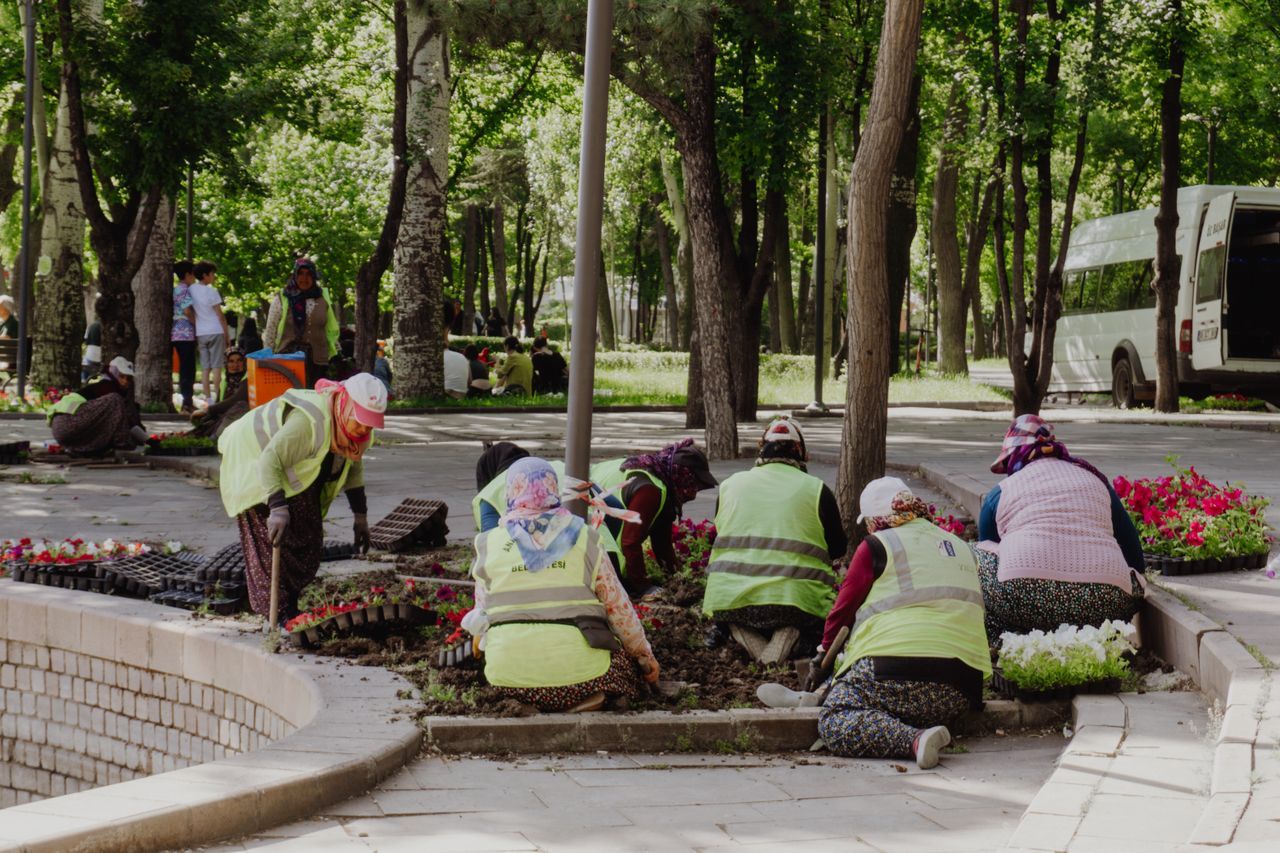
Community gardens and environmental groups. Outdoor volunteer work — maintaining a community garden, clearing a riverbank, planting trees — combines physical activity with repeated contact in a relaxed setting. Gardening in particular creates natural pauses for tea, conversation, and planning. The seasonal rhythm means you observe the same people through the year.
Library programmes. Volunteering with library reading groups, children’s sessions, homework clubs, or adult literacy programmes involves regular scheduling and working alongside the same team of helpers. Libraries also tend to have active volunteer communities with their own social structures.
Event and festival committees. Organising community events — fairs, fêtes, fundraisers, heritage open days — involves weeks of planning meetings and collaborative work with a small team. The shared deadline and tangible output create the kind of purpose-driven bonding that open-ended volunteering sometimes lacks.
Volunteer Roles That Sound Social but Aren’t
Some volunteer work appears social from the outside but in practice involves working alone or with constantly rotating strangers. These roles can be personally rewarding without producing the repeated social contact that builds connection.
One-off event stewarding. Helping at a single fundraiser or community event introduces you to people you will not see again. Without repeat contact, familiarity cannot develop.
Solo administrative work. Envelope stuffing, data entry, phone banking from home, or online volunteering keeps you useful but isolated. The work serves a purpose without serving a social one.
Drop-in roles with no regular schedule. If you attend whenever you are free rather than committing to a consistent shift, you encounter different people each time. The irregularity prevents the repetition that social connection requires.
Large-team roles with no sub-group structure. Occasionally, a volunteer role involves fifty people doing the same thing in parallel without meaningful interaction. A massive park cleanup or a large-scale marshalling event may feel social in theory but produce no individual connection in practice.
The filter is simple: does this role put me alongside the same 2-8 people on a regular schedule? If yes, it will likely produce social connection over time. If no — if the people rotate, the schedule is irregular, or the work is solo — it probably will not.
What You Can Learn About Someone Through Volunteering
One of the less-discussed advantages of meeting people through volunteering is the quality of information you gather about them — without either person needing to perform or disclose.
Reliability. Do they show up when they said they would? This single signal tells you more about someone’s character than three dates at a restaurant.
Patience and kindness under low-stakes pressure. How do they respond when a customer is confused, when the delivery is late, when the new volunteer makes a mistake? These observations are available to you in a volunteer setting in ways that curated dating contexts never provide.
Energy and temperament. Are they chatty or quiet? Do they prefer leading or following? Are they steady or frenetic? Over weeks of working alongside someone, you develop a feel for their energy that is impossible to assess through a dating profile or a structured event.
Values in action. Volunteering reveals what someone cares about through behaviour rather than declaration. The person who gives their Saturday to a food bank, who stays late to finish a job properly, who speaks gently to a lost visitor — these are demonstrations of character that require no self-report.
This passive observation is particularly valuable for people over 50 who have learned from experience that first impressions and self-presentation do not always predict how someone behaves in ordinary life. Volunteering provides a longer, less curated window into someone’s character before any personal interest needs to be declared. If what you observe over weeks of shared work develops into genuine attraction, the guide to building connection slowly after 50 covers how to let that progression unfold at its own pace.
How to Find Volunteer Work That Fits
Finding the right role requires matching your social preferences to the structure of the work. A few practical steps:
Decide on regularity first. Choose a commitment you can sustain — one shift per week or one per fortnight. Regular attendance is more important than total hours. A single morning every week will produce more social contact over three months than sporadic half-days.
Choose team-based over solo. When browsing opportunities, look specifically for roles that mention working alongside other volunteers rather than working independently. If the description emphasises “flexible hours” and “work at your own pace,” it may be a solo role with minimal social contact.
Where to look:
- Do-it.org (UK) or VolunteerMatch (US) — searchable by area, interest, and schedule
- Local charity websites — most charities list volunteer opportunities directly
- Community notice boards in libraries, community centres, and supermarkets
- Council volunteering pages — many local authorities maintain lists of opportunities
- Direct approach — walk into a charity shop, community garden, or heritage site and ask whether they need regular volunteers
- National organisations — National Trust, RSPB, Oxfam, Age UK, food bank networks, Habitat for Humanity all have local roles
What to ask before committing:
- How many volunteers work on each shift?
- Is the team consistent, or do people rotate?
- What does a typical shift involve?
- Is there a trial period or taster session?
- Are there social elements beyond the work itself (tea breaks, volunteer socials, training days)?
Start small. One regular commitment is better than three irregular ones. Attend consistently for six to eight weeks before assessing whether the social element is developing. The first few shifts are always the least social — you are learning the work, not yet familiar to the team. By week four, you are a regular. By week eight, you know people.
If the idea of walking into a new setting feels daunting, you are not alone. The guide to rebuilding social confidence addresses that earlier step. Volunteering is often recommended as a starting point for social rebuilding precisely because the work provides structure and reduces the burden of initiating conversation from scratch.
If you want companionship more than intensity, volunteering suits that preference — the connection is warm and purposeful without carrying romantic or evaluative pressure.
Frequently Asked Questions
Does volunteering actually help you meet people?
Yes, when the role involves regular team-based contact with the same people. The social mechanism is the same as any effective meeting context: repeated exposure, shared purpose, and natural conversation built into the activity. One-off or solo roles do not produce the same effect. The key is consistency — the same shift, the same people, week after week.
What kind of volunteering is most social?
Team-based roles with regular schedules and small, consistent groups. Charity shop shifts, community kitchen sessions, heritage site front-of-house, gardening groups, and event committees all consistently produce social bonds. Avoid solo administrative work, one-off events, and large-group roles where individual interaction is minimal.
How many hours per week do I need to commit?
One regular shift per week — typically 3-4 hours — is enough to build familiarity over time. Regularity matters more than total hours. A single consistent morning produces more social connection than sporadic full days because it creates the repetition that relationships require.
What if I want to volunteer but feel socially anxious?
Volunteering is often recommended specifically for people rebuilding social confidence because the work provides something to focus on besides conversation. You have a task, a role, and a reason to be there that has nothing to do with social performance. Choose a role with a clear physical component (sorting, gardening, serving) and let conversation develop at its own pace.
Can volunteering lead to romantic connections?
It can, though that is better understood as an occasional outcome rather than a reasonable expectation. Volunteering expands your social network with people who share your values and schedule. Some of those people will be single. Some connections will develop beyond the volunteer context. But treating volunteering as a dating strategy misses the point and usually produces worse social outcomes than treating it as what it is: purposeful activity that happens to put you alongside interesting people.
One Practical Starting Point
Choose one organisation whose work you respect and one regular time slot you can sustain. Ask about team-based shifts. Attend consistently for six weeks. That is the experiment — not volunteering for the purpose of meeting someone, but volunteering for a purpose you value, in a context where connection can develop without being forced.
The people you meet through shared work will know you as someone who is reliable, present, and willing to contribute. That is a better introduction than any profile or first-date performance can provide.