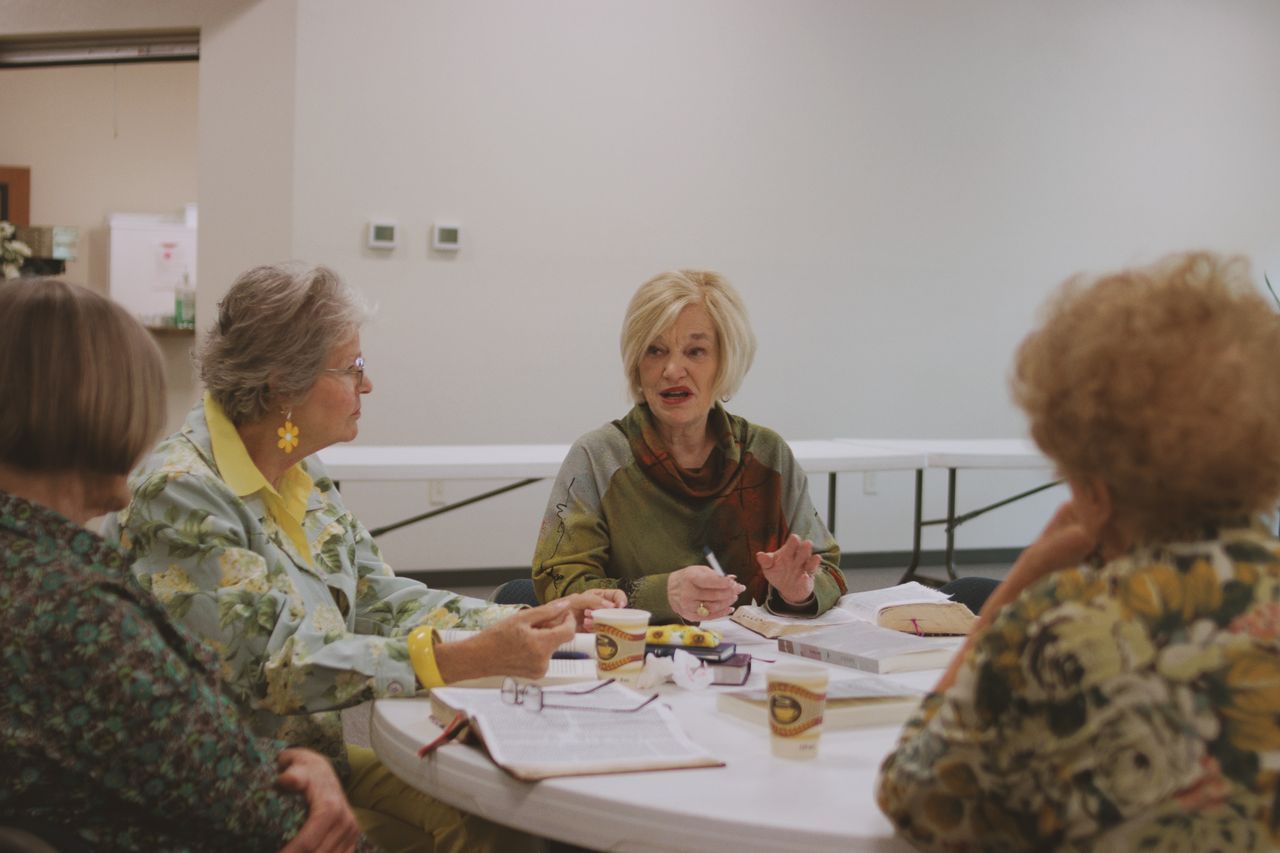
Editorial note: This guide draws on conversations with readers over 50 who found social connection through community groups — faith communities, civic organisations, cultural societies, and neighbourhood associations — and on their reflections about what helped, what surprised them, and what took longer than expected. A 2020 report by the National Academies of Sciences, Engineering, and Medicine found that meaningful community participation is among the strongest protective factors against social isolation in older adults, with regular group involvement associated with lower rates of loneliness, depression, and cognitive decline. We are not community organisers or social workers. This guide is observational — a description of how community groups tend to function as connection pathways, not a prescription to join them.
Most advice about meeting people after 50 focuses on activities you could start: a new hobby, a class, a singles event. That guidance has its place, but it often overlooks something quieter: the community groups that already exist in most towns and cities, operating on schedules, rosters, and shared purposes that have nothing to do with dating or socialising. Faith communities, civic clubs, cultural societies, neighbourhood associations, library groups. These are not designed as meeting places. They function as meeting places anyway, because they create the conditions that connection actually requires: regularity, familiarity, shared context, and something to do together besides talk. In smaller communities especially, these groups often draw members from a wider radius and serve as the primary social infrastructure for dating after 60 in a small town.
This guide looks at how community groups work as pathways to meet people through community groups after 50 — not because they promise romance or guarantee friendship, but because they offer repeated, low-pressure contact with people who share at least one practical interest with you. For a broader overview of offline meeting places, see our guide to where to meet singles over 50 beyond dating apps. If you are weighing whether community groups or dedicated singles events would suit you better, the comparison of singles events vs social clubs over 50 addresses that decision directly.
Why Community Groups Work Differently
The mechanism behind community groups is not novelty. It is repetition.
Most social advice emphasises putting yourself out there, attending events, starting conversations, making an impression. Community groups work on a different principle. You show up regularly. You see the same people. Familiarity builds without anyone forcing it. Conversation happens in the margins of a shared activity rather than as the activity itself.
This matters because sustained, low-key contact is how most adult friendships actually form after the automatic social mixing of work and school ends. Research on adult relationship formation consistently identifies three conditions: physical proximity, repeated unplanned interactions, and a setting that encourages spontaneous conversation. Community groups provide all three by design, even though connection is rarely their stated purpose.
The social pressure is also lower. Nobody at a church committee meeting or a garden society afternoon is evaluating you as a potential partner or friend. You are simply someone who shows up. Over time, showing up reliably is enough to become a familiar face, and familiar faces eventually become the people you speak with naturally — over tea, after the meeting, during the shared task.
This is slower than a singles event or a dating app. It is also more durable. The people you meet through repeated community contact are already embedded in a shared context. You know something about them before you ever have a private conversation. They know something about you. Walking groups are a particularly clear example of this: the side-by-side format removes performance pressure and lets familiarity build through repetition alone. One woman’s experience of joining a walking group after 60 traces what that process actually looks like, week by week.
Types of Community Groups Worth Considering
Not every community group produces social connection equally. The ones that work best tend to share a few features: regular meetings (weekly or fortnightly), small enough membership that faces become familiar, some interactive component (not just listening to a speaker), and a practical purpose that gives everyone something to contribute toward.
If you are looking for activity-based groups built around a specific interest, our guide to hobbies that help you meet people after 50 covers that ground in more detail. What follows here focuses on membership-based community organisations: groups whose primary purpose is community service, worship, cultural preservation, or civic participation, and where connection is a natural byproduct of involvement.
Faith and Worship Communities
Faith communities remain one of the largest and most accessible sources of social infrastructure for adults over 50. Churches, synagogues, mosques, Quaker meetings, and other congregations typically offer multiple layers of involvement beyond worship: social committees, community meals, fundraising groups, pastoral care teams, choirs, and study groups.
The social layer of a faith community often operates somewhat independently from the worship itself. Many readers described attending community activities — coffee mornings, volunteer rosters, fundraising events — while holding varying levels of personal belief. The bar for participation is usually low, and most congregations welcome people who are exploring rather than committed.
What makes faith communities effective for meeting people is their built-in regularity (weekly services, monthly socials), their cross-generational mixing, and their culture of welcoming newcomers. The practical threshold is lower than most secular organisations. You can simply attend and be present.
Civic and Service Clubs
Rotary, Lions, Kiwanis, Soroptimist International, Round Table alumni groups, and similar service organisations exist in most towns and meet regularly, usually weekly or fortnightly for breakfast, lunch, or evening sessions. Their purpose is community service, but their operating method is social: shared meals, joint projects, committee work, and guest speakers followed by informal conversation.
These clubs tend to attract people who want structure and purpose in their social life rather than open-ended mingling. Membership is usually straightforward: attend a few meetings as a guest, express interest, and you are typically welcomed. The formality varies; some clubs retain jacket-and-tie traditions, while others are more relaxed.
The advantage of civic clubs is their rhythm. A weekly meeting with the same 15–40 people, a shared project that requires coordination, and a culture that values reliability. If you show up consistently, you become part of the fabric quickly.
Cultural and Interest Societies
Historical societies, garden clubs, local arts councils, amateur dramatic societies, literary circles, language exchange groups, and music societies operate across most regions. These tend to be smaller than faith communities or civic clubs, which can make them easier to enter. Fewer people means conversations happen more naturally.
The focus on a shared subject provides conversational scaffolding. You are not making small talk from nothing; you are discussing the roses, the local archive, the next production, or the translation exercise. The subject carries the interaction, which suits people who find purely social settings draining.
Neighbourhood and Local Governance
Parish councils, residents’ associations, community boards, local planning groups, and town committees offer a civic entry point that is hyper-local. These groups tend to be small, committed, and always looking for new participants. Volunteer fatigue is common in local governance, which means newcomers are genuinely welcomed rather than politely tolerated.
The social benefit is indirect but real. Working alongside neighbours on practical issues (planning objections, park maintenance, community events) creates the kind of shared-task familiarity that naturally extends into personal connection.
Getting Past the Newcomer Stage
The hardest part of joining any established community group is the first month. Everyone else seems to know each other. Conversations reference shared history you were not part of. The tea rota, the committee structure, the running jokes — all of it signals that you are arriving into something already formed.
This is normal, and it passes. But it helps to understand what is actually happening rather than interpreting it as rejection.
Established groups develop social shorthand over time. Members are not deliberately excluding you; they are operating inside patterns that formed before you arrived. Your job in the first few weeks is modest: show up, participate in whatever is happening, and let people register your presence without needing to impress anyone.
One reader described it this way: “I went to the same church coffee morning four weeks in a row before anyone really talked to me beyond hello. The fifth week, someone asked if I wanted to help set up the tables. That was when I started to feel like I was actually there, not just visiting.” The shift often comes through usefulness: volunteering for a small task, staying to help clear up, offering a practical contribution that signals you intend to stay.
A few things that help the newcomer period feel less exposed:
Arrive slightly early rather than exactly on time. The pre-meeting minutes are often where informal conversation happens, and a half-empty room feels less intimidating than walking into a full one. If the act of speaking to someone unfamiliar feels like its own barrier, our guide on how to start conversations with strangers after 50 covers that threshold specifically.
Introduce yourself to whoever is coordinating, not to the whole room. One point of contact is enough. That person will usually mention you to others or introduce you naturally.
Expect to feel peripheral for 3–6 sessions. This is the pace of adult group integration, not a sign that you chose poorly. If social confidence is the barrier rather than logistics, our guide on how to rebuild social confidence before dating may be useful context — the principles apply to any social re-entry, not only dating.
Accept that some groups will feel warmer than others. Group culture varies. A garden club in one village may be effusively welcoming; the same type of group three miles away may take longer to open. If the first group does not click after a genuine effort, try another before concluding that community groups are not for you.
What Connection Looks Like in Practice
Community groups are not dating services. The connections that develop are broader and less specific than what a dating app or singles event offers. That breadth is part of their value.
What typically happens is layered. First, you become a familiar face. Then you become someone people greet by name. Then you become someone people seek out for specific conversations — about the group’s activities, but increasingly about life beyond the meeting room. Friendships form around the edges of shared tasks. Companionship develops from the accumulated weight of ordinary contact.
Some of those connections stay within the group context. Others extend into independent social life — a walking companion, someone to share a Sunday lunch with, a person you text when you read something they would find interesting. Occasionally, the familiarity and trust built through group participation becomes the foundation for romantic interest. But treating community groups as a dating strategy misses their actual mechanism and usually produces disappointment. If you already have acquaintances you wish were closer, our guide on how to turn an acquaintance into a closer connection after 50 covers that specific transition.
The more useful frame is this: community groups rebuild the social surround that employment and family life once provided automatically. They re-populate your week with faces, names, and low-stakes interactions. From that broader social base, deeper connections — including romantic ones — become possible in ways they cannot when your social world has contracted to a few close friends and family.
If you are specifically interested in how to move from pleasant acquaintance to something more personally meaningful, our guide on how to build connection slowly after 50 covers that transition directly.
When a Group Is Not the Right Fit
Not every group will suit you, and staying in the wrong one out of obligation or stubbornness is not perseverance. It is just time spent in the wrong room.
Signs a group may not be the right fit:
The social culture feels closed rather than merely established. If after 8–10 visits you are still being spoken around rather than spoken to, and you have made genuine effort (volunteering, arriving early, contributing), the group may have a culture that resists new members. This is different from the normal newcomer adjustment period.
The group’s values or politics make you consistently uncomfortable. Community groups often reflect the demographics of their locality. If you find yourself biting your tongue at every meeting, the mismatch is real and will not improve with familiarity.
The format does not generate interaction. Some groups are structured as audiences: a speaker, a lecture, a presentation with questions. If there is no social component before, during, or after, the group may be intellectually valuable but socially inert.
You dread attending. Mild reluctance before a new social situation is normal. Genuine dread after several months suggests the group is not serving you.
Leaving gracefully is straightforward. Most community groups do not require formal resignation. You simply stop attending. If you have developed any relationships there, a brief “I’m stepping back for now” to one or two people is courteous and sufficient. You can always try a different type of group — or the same type in a different location. For structured social formats with explicit connection goals, singles events for people over 50 offer a different pace entirely.
Frequently Asked Questions
What community groups are good for meeting people after 50?
Groups with regular meetings, a shared purpose beyond socialising, and small enough membership that you see the same faces repeatedly. Faith communities, civic clubs like Rotary or Lions, garden societies, historical societies, library reading groups, and neighbourhood associations all fit this pattern. The specific group matters less than whether it meets consistently and involves enough interaction for familiarity to develop over weeks.
How do I join a community group if I don’t know anyone there?
Most community groups welcome new members without requiring an introduction or invitation. Attend a session as a visitor, introduce yourself briefly to whoever is coordinating, and let the structure of the meeting carry you through. You do not need to know anyone beforehand. The first two or three visits will feel slightly awkward — that is normal for anyone entering an established group, not a sign that you do not belong.
Can church groups help you meet people even if you’re not very religious?
Many people participate in faith community activities — coffee mornings, fundraisers, community lunches, choir, social committees — without strong personal belief. Most congregations welcome this. The social infrastructure of a faith community often operates separately from worship itself. If attending services feels uncomfortable, look for the activity layer: volunteer committees, community meals, or social groups that meet independently.
How long does it take to build friendships through community groups?
Research on adult friendships suggests it takes roughly 50 hours of shared time before someone moves from acquaintance to casual friend, and over 200 hours for close friendship. At one meeting per week, that means several months before relationships feel natural and easy. The pace is slower than many people expect, but the connections tend to be more durable than those formed in high-energy social settings because they are built on repeated, low-pressure contact.
A Smaller, Steadier Starting Point
You do not need to join five groups or commit to a year of attendance. One group, one regular session, one small contribution to something already happening near you. That is enough to begin changing the shape of your week. If you are rebuilding from a more complete starting point, with little social contact at all, the guide to building a social life from scratch after 50 covers the full sequence.
Community groups will not guarantee friendship or companionship. They cannot promise that. What they offer is simpler: a reason to be somewhere regularly, alongside people who are also choosing to be there. Over time, that shared choice tends to produce the kind of connection that more intense social formats struggle to replicate — not because the people are better suited to you, but because the pace allows something quieter to develop.
If volunteering appeals more than membership, our guide to volunteering as a way to meet people after 50 covers that path specifically. If you are weighing several options at once, the broader guide to where to meet singles over 50 beyond dating apps maps the full landscape.