Editorial note: This guide draws on reader conversations about the difference between hobbies that fill time and hobbies that actually introduce you to other people. A 2024 University of Michigan National Poll on Healthy Aging found that adults aged 50-80 who participated in regular group activities reported significantly lower rates of loneliness than those whose activities were primarily solo — even when total activity levels were similar. The distinction is not how busy you are, but how often your activity puts you in the same room as the same people. We are not activity organisers. This guide is observational and editorial.
Not every hobby helps you meet people. Some sound social — pottery, painting, gardening — but in practice involve you sitting alone at home or working independently in a shared space without meaningful interaction. Others look less promising on paper but reliably produce connection because of how they are structured.
If you are looking for hobbies that help you meet people after 50, the useful question is not “what sounds interesting?” but “what puts me in regular contact with the same group of people in a setting where conversation happens naturally?” That filter narrows the field considerably — and the hobbies that pass it share a few specific qualities. If retirement specifically is what contracted your social world, the guide to making friends in retirement covers the broader structural picture before you choose an activity.
This guide organises social hobbies by type and explains what makes each one effective for meeting people, not just for filling time. Each section includes practical direction on how to find and join groups locally.
What Makes a Hobby Genuinely Social
Three qualities distinguish hobbies that produce real social connection from hobbies that merely involve other people being present:
Regular repetition with the same group. A one-off workshop introduces you to strangers who then disappear. A weekly class, a fortnightly group, or a regular volunteer shift keeps the same faces in front of you long enough for familiarity to build. The hobby needs to repeat, and the membership needs to be somewhat stable.
Conversation built into the activity. Some group settings are technically shared but socially silent — a busy gym, a drop-in yoga class, a large lecture. The hobbies that work best for meeting people involve natural pauses for talk: breaks between songs in a choir, discussion after a book club reading, conversation while walking side by side, chat between pottery kiln firings.
Shared purpose beyond socialising. Paradoxically, the best social hobbies are not about socialising. They give you something to do and discuss that is not yourself. The shared interest provides conversational scaffolding and removes the performance pressure of settings designed purely for meeting people.
Hobbies that lack these qualities — home-based crafts, solo running, individual meditation practice, large anonymous gym sessions — can be personally enriching without being socially productive. There is nothing wrong with them, but they will not introduce you to anyone new.
The broader guide to meeting singles over 50 beyond dating apps covers the underlying principle in more detail. This guide applies it specifically to hobby selection.
Physical and Outdoor Hobbies
Physical hobbies that involve group participation and side-by-side activity tend to produce connection efficiently. The body being occupied reduces social self-consciousness. Shared physical challenge builds camaraderie. And outdoor settings — walking, gardening, cycling — create natural conversational rhythm without requiring eye contact or sustained attention.
Walking and hiking groups. Weekly or fortnightly group walks are among the most accessible social hobbies for people over 50. Side-by-side activity, varied conversation partners along the route, no fitness threshold for “social pace” groups. Find them through local Ramblers associations, Meetup, park districts, community centres, or Facebook local groups.
Community gardening and allotments. Regular work alongside the same people, with natural pauses for tea and conversation. Allotment societies and community gardens attract a wide age range and tend to be welcoming to newcomers. The shared project creates something to discuss beyond personal life.
Swimming and aqua fitness. Regular-time pool sessions create familiar faces. Aqua fitness classes for over-50s are particularly social because they involve conversation before and after class, and the group tends to be consistent week to week. Local leisure centres and community pools are the starting point.
Cycling groups. Social cycling clubs for older adults (often called “easy riders” or “gentle cycling” groups) ride together at moderate pace with cafe stops. The format blends exercise with conversation. Search Cycling UK, local bike shops, or Meetup.
Dance classes. Partner dancing (ballroom, swing, salsa) and group forms (line dancing, folk, ceilidh) both produce regular social contact. Partner dancing involves rotating partners, which means you interact with everyone in the room. Group dancing creates shared rhythm and natural laughter without requiring individual conversation. Community centres, dance studios, and adult education programmes all offer classes aimed at over-50s.
Creative Hobbies
Creative group activities work well for meeting people because they combine focused work with natural social pauses — and because making something together creates a specific kind of shared vulnerability. Everyone is a beginner or at least imperfect, which levels the social field.
Choir and community singing. Singing together produces social connection faster than almost any other group activity. The shared physical act of producing sound generates warmth and belonging independent of musical ability. You do not need to read music or audition for most community choirs. Weekly rehearsals create consistency, and the social element — tea breaks, post-rehearsal drinks, performance preparation — builds relationships that extend beyond the singing itself.
Art and drawing classes. Weekly art classes in small groups (8-15 people) provide two hours of focused work alongside others, with natural breaks for feedback, discussion, and tea. The shared experience of learning something visible — where your progress and struggles are both on display — creates conversational material without requiring personal disclosure. Local art centres, community colleges, and adult education programmes run classes at all levels.
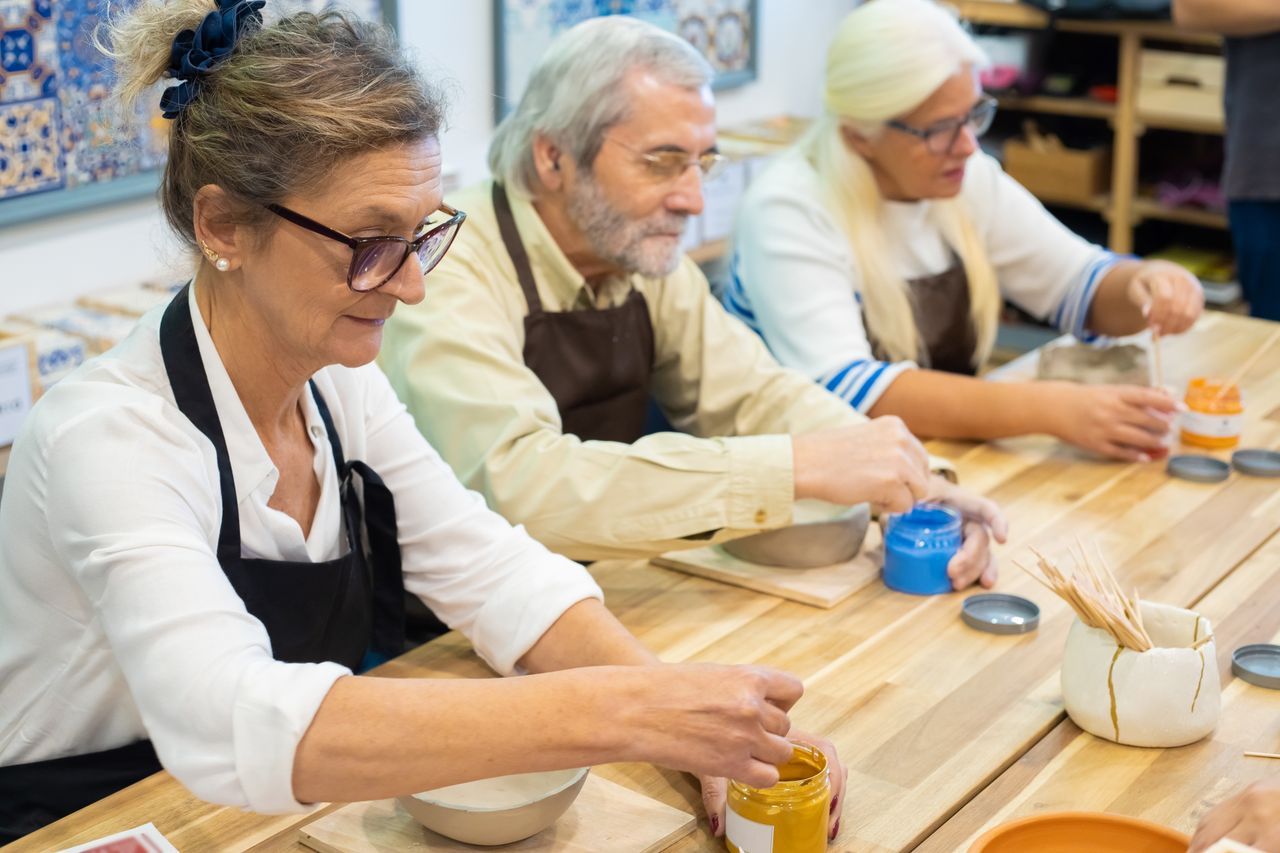
Pottery and ceramics. Pottery involves waiting — for kiln firings, for drying time, for instruction. Those pauses are where the social element lives. Small pottery studios with regular weekly sessions and consistent membership tend to produce strong social bonds. The tactile, absorbing nature of the work also reduces self-consciousness in ways that purely conversational settings do not.
Photography groups. Photography clubs combine individual creative work with group outings, critique sessions, and themed projects. The outings are particularly social — walking together through a landscape or a town, pausing at the same spots, discussing composition and light. Groups meet through camera clubs, Meetup, or local photography societies.
Creative writing groups. Small writing circles (5-10 people) that meet weekly or fortnightly to share and discuss work create a specific kind of intimacy. Reading your writing aloud and listening to others’ builds trust and conversation. The vulnerability of sharing creative work bonds people faster than many conventional social settings.
Intellectual and Learning Hobbies
For people who connect through ideas and discussion, intellectual hobbies provide conversational depth that activity-based groups sometimes lack. The shared subject gives you something to discuss that is genuinely interesting — not small talk, not personal disclosure, but engaged conversation about a topic you both chose to spend time on.
Book clubs. Library-hosted or independent book clubs meet monthly to discuss a shared reading. The format is inherently conversational — you arrive with opinions, questions, and reactions, and the discussion is the activity. Groups of 8-12 work best for ensuring everyone speaks. Libraries are the easiest starting point; many run multiple groups with different reading preferences.
Language classes. Conversational language courses (as opposed to grammar-focused ones) involve pair work, group exercises, and shared fumbling through unfamiliar territory. The shared challenge and mutual imperfection create social ease. Evening and weekend classes through community colleges or adult education centres attract people over 50 with time and curiosity.
History and archaeology groups. Local history societies, archaeology volunteer digs, and heritage groups combine intellectual interest with regular meetings, field trips, and shared projects. They attract people who enjoy sustained topics rather than surface conversation. Council websites and local museum notice boards are good starting points.
Bridge, chess, and strategy games. These combine intellectual challenge with regular social contact. Bridge clubs in particular have a strong tradition of weekly or twice-weekly meetings with consistent membership, and the game itself requires partnership and conversation. Many clubs welcome complete beginners with teaching sessions.
Community and Service Hobbies
Service-oriented activities combine social contact with a sense of contribution — which for many people over 50 produces a deeper sense of belonging than purely recreational hobbies. The shared purpose creates natural camaraderie, and the regular schedule builds the repetition that social connection requires.
Volunteering with regular shifts. Charity shops, food banks, community kitchens, hospital visiting programmes, heritage sites, library programmes. The key is regularity — a weekly or fortnightly shift with the same people rather than occasional drop-in sessions. The work gives you something to do together, and conversation fills the spaces naturally. The guide to volunteering as a way to meet people covers which roles are most social and how to find them.
Community event committees. Local festivals, fairs, fundraisers, and community celebrations all need volunteers who plan and organise together over weeks or months. The shared project creates purpose-driven social contact with a defined timeline and a clear outcome.
Park and environmental conservation groups. “Friends of” groups for local parks, river clean-ups, conservation volunteer programmes. These combine outdoor physical work with regular group membership and a visible shared purpose. The environmental focus attracts people who care about their local area — a value that provides immediate common ground.
Mentoring and skills-sharing. Programmes where you teach or share a skill — literacy tutoring, digital skills for older adults, conversation partners for language learners — create regular one-to-one or small-group contact with a built-in reason for conversation. The helping role also provides social structure without requiring you to initiate personal topics.
If you want companionship more than intensity, community service hobbies often suit that preference — the connection is warm and purposeful without carrying romantic or evaluative pressure. For membership-based organisations where the purpose is civic or communal rather than activity-based — Rotary, faith communities, neighbourhood associations — our guide to meeting people through community groups explores that path separately.
How to Find and Join a Group
Knowing which hobbies suit you is half the work. The other half is finding a specific group you can actually attend. Most people stall at this step — not because groups do not exist, but because finding them requires a few minutes of practical searching.
Where to look:
- Library notice boards and websites. Libraries host book clubs, writing groups, language exchanges, and creative workshops. They also advertise local groups.
- Community centre programmes. Most community centres publish seasonal schedules of classes, groups, and clubs for adults. Many offer taster sessions.
- Meetup. Search by activity, location, and age range. Walking groups, photography clubs, language exchanges, and social groups for over-50s are well-represented.
- Council and local authority websites. Many list community groups, volunteering opportunities, and adult education programmes.
- Facebook local groups. Search for your area + the activity. Many walking groups, gardening societies, and cycling clubs use Facebook for organisation.
- Charity websites. For volunteering, search the websites of charities you care about for local volunteer opportunities with regular shifts.
- Adult education college websites. Search for evening and daytime courses — art, languages, cooking, history, creative writing.
- National organisation local branches. Ramblers, U3A (University of the Third Age), WI (Women’s Institute), Men’s Sheds, Cycling UK, local choral societies — all have searchable local branch finders. For men specifically looking for social hobbies outside of dating groups, the guide to social hobbies for men over 50 covers activities filtered through male friendship patterns and the shoulder-to-shoulder bonding mechanism. For women specifically interested in where men over 60 tend to congregate, the guide to meeting men over 60 without apps covers the activity patterns that attract them. For single women looking for activities they can join alone without feeling conspicuous, the guide to activities for single women over 50 applies these principles through that specific lens.
How to start:
- Choose one hobby that interests you and search for a specific local group
- Contact the organiser or simply attend a session as a visitor (most expect this)
- Commit to attending three times before deciding whether it suits you — the first visit is always the most awkward
- If the first group does not fit, try a different one in the same hobby category — groups vary enormously in atmosphere and welcome
You do not need to feel socially confident before attending. If you are still rebuilding ease after a period of isolation, attending a group in quiet observational mode is a legitimate starting point. Showing up is the requirement. Participating fully comes later. If a longer residential experience appeals — concentrated time with a group in an unfamiliar setting — the guide to travel groups for singles over 50 covers how group trips work, what they cost, and how to choose based on social temperament.
Frequently Asked Questions
What hobbies are best for meeting people after 50?
Hobbies with regular group meetings, shared activities, and natural conversation pauses. Walking groups, choirs, art classes, book clubs, dance classes, and volunteering with regular shifts consistently produce social connection because they combine repetition, shared purpose, and conversational opportunity. The specific activity matters less than whether it puts you alongside the same people regularly.
How do I find hobby groups near me?
Start with your local library, community centre programme, and Meetup. For specific activities, search national organisations with local branches — Ramblers for walking, U3A for learning, local choral societies for singing, Cycling UK for cycling groups. Council websites and Facebook local groups also list community activities. Most groups welcome visitors without advance commitment.
What if I don’t have any hobbies?
You do not need an existing hobby to start. Many group activities are designed for beginners — community choirs that do not require auditions, art classes for all levels, beginner language courses, gentle walking groups. The hobby is the means, not the prerequisite. Choose something mildly interesting and attend for the social structure, not because you are already passionate about it.
Are some hobbies better for introverts who want to meet people?
Side-by-side activities suit introverts best — walking, gardening, pottery, cycling. These create natural conversation without requiring sustained face-to-face interaction or social performance. Small groups under 12 people with a shared focus are less draining than large open-ended social settings. Avoid activities where the social element is the only purpose, and choose ones where the activity itself carries the interaction.
How long before a hobby group leads to real friendships?
Typically 6-12 weeks of regular attendance. The first few sessions establish familiarity. By the fourth or fifth meeting, you are a recognised face. Genuine connection usually develops after consistent attendance over two to three months. The timeline is gradual and depends on group size, your social openness, and how often you attend. The guide to becoming a regular somewhere after 60 explains this mechanism in detail, including what to do during the invisible early weeks.
One Practical Starting Point
Choose one hobby from this guide that genuinely interests you — even mildly. Search for a local group that meets regularly and is open to newcomers. Attend three times. That is the experiment. Not five new activities, not a complete social overhaul. One group, three visits, and then an honest assessment of whether the setting suits your pace.
Connection builds from repetition, not from variety. One weekly commitment that you sustain is worth more than five one-off visits to different groups. Find the setting that feels manageable, and let familiarity do its work.