Editorial note: This guide draws on reader conversations about the specific social contraction that follows retirement — not crisis-driven isolation, but the gradual disappearance of workplace-based connection that many people do not anticipate until it has already happened. A 2025 longitudinal analysis in BMC Public Health using the English Longitudinal Study of Ageing found that retirement reduced odds of social isolation for newly retired individuals in the short term, but that long-term social outcomes depend heavily on whether retirees establish new structured contact outside work. Separately, JAMA data from 2024 found that 33.4% of US adults aged 50–80 reported feeling a lack of companionship some or much of the time. We are not social workers or therapists. This guide is practical and observational — a description of why retirement changes social life and what tends to help rebuild it.
Most people do not retire expecting to feel lonely. The transition feels like relief, freedom, rest. And it often is all of those things. But somewhere in the first year, many retirees notice something quieter: the social life that once ran in the background, without effort or planning, has stopped running. Not because friendships ended dramatically, but because the structure that kept them alive has disappeared. If loneliness itself is what you are feeling most acutely, the guide to what actually helps with loneliness after 60 addresses the emotional dimension directly.
If you are trying to work out how to make friends in retirement, you are probably already past the stage of general loneliness advice. You know the problem is specific. You have not forgotten how to be social. The particular architecture that used to generate social contact, showing up at the same place with the same people five days a week, no longer exists. And nothing has replaced it automatically.
This guide is about that specific gap: what retirement removes, why it is harder to replace than most people expect, and what actually works for rebuilding connection when the scaffolding is gone. For the broader sequence of building a social life from near-zero, that guide covers the full staged approach. For the full landscape of friend-finding methods — apps, local groups, volunteering, neighbourhood routines — the practical guide to finding friends after 50 covers each channel with honest assessments. This one focuses on what is particular to retirement.
Why Retirement Changes Your Social Life
The loss is structural before it is emotional. Understanding the structure helps explain why willpower alone does not fix it.
The Workplace Friendship Structure
Work provided three things that most people never had to think about, because they arrived automatically:
Repeated proximity to the same people. You saw the same colleagues daily or weekly, without arranging to see them. Familiarity built over months and years of shared presence, not through deliberate social effort.
Shared context and purpose. You had something to talk about that was neither personal nor forced. Projects, deadlines, office dynamics, shared frustrations: all of it gave conversations natural material without requiring anyone to generate it from scratch.
Low-stakes social contact. The corridor chat, the lunch table, the coffee queue. None of it demanded emotional investment or planning. It simply happened, and over time it accumulated into something that felt like friendship — even when it never extended outside the building.
These three conditions — repetition, shared context, low effort — are the structural requirements for adult friendship formation. Work provided all of them by default. That is why workplace friendships often feel easy in a way that post-retirement friendships do not. For men, the gap is often sharper because work-dependent social lives are statistically more common among men than women — the guide to social hobbies for men over 50 who do not want a dating group addresses that specific pattern.
What Disappears When You Leave
When you retire, all three conditions vanish simultaneously. There is no replacement structure waiting. The social contact that filled your week was not something you built. It was something the job built around you. Without it:
Your week no longer contains automatic contact with anyone outside your household. Every interaction becomes something you have to initiate, plan, or attend deliberately.
The shared context disappears. You and your former colleagues no longer have daily material to talk about. Conversations that once flowed easily now require more effort to sustain, and many gradually thin out.
Your social identity shifts. At work, you were someone with a defined role, visible to others in a shared context. In retirement, you are someone people have to remember to include. The invitations that came automatically (lunches, after-work drinks, birthday collections) stop arriving because you are no longer in the system that generated them.
This is not a failure of character or effort. It is a structural reality. The people who find it easy to make friends in retirement are usually people who replaced the structure early, often before they fully needed to.
Why It Feels Harder Than You Expected
One reader described it simply: “I thought I’d have more time for friends. Instead I have more time and fewer friends.” That captures something precise. Retirement removes the constraint that limited social life (no time, too tired after work) and simultaneously removes the mechanism that produced it (being around people every day). More freedom does not automatically mean more connection. Often it means less.
The surprise is part of what makes it harder. If you had expected this gap, you might have prepared for it: joined something before leaving work, maintained colleague relationships more actively, built non-work friendships earlier. Most people do not anticipate it because workplace social life was so effortless that it never registered as something that could disappear.
There is also a dignity dimension. Making friends as an adult can feel uncomfortably like something you should have figured out decades ago. The advice often sounds like it is for someone younger, or someone more isolated, or someone less capable. If you have spent thirty or forty years being socially competent at work, the idea that you now need to “put yourself out there” can feel reductive.
The difficulty is not personal. Research consistently shows that adult friendship formation requires approximately 50 hours of shared time to move from acquaintance to casual friend, and over 200 hours for close friendship. Without a structure that generates those hours passively, most people find it genuinely hard, regardless of social skill or personality.
What Actually Works (And Why)
The approaches that reliably produce friendship in retirement share three qualities — the same three that work provided automatically:
Regular repetition. Seeing the same people weekly or fortnightly, not once. A single event introduces you to strangers who then disappear. A recurring commitment keeps the same faces in front of you long enough for recognition to become familiarity, and familiarity to become conversation.
A shared activity. Something to do together that is not socialising itself. The activity provides conversational scaffolding and removes the performance pressure of settings designed purely for meeting people. You talk about the walk, the volunteer task, the class exercise. Not yourself, at least not at first.
Low individual pressure. Settings where you can show up without declaring social intent, without performing, and without anyone evaluating you. Community groups, classes, and regular volunteering all fit this pattern because connection is a byproduct of participation, not its stated purpose.
These three principles matter more than which specific activity you choose. A weekly pottery class with stable membership will produce more genuine connection than attending five different networking events in a month, because repetition does what variety cannot.
Practical Paths to Try
The following are not a checklist. They are categories of structured social contact that tend to work for retirees specifically, because they provide repetition, shared purpose, and low-pressure interaction in settings that do not require you to already know people or to declare that you are there to make friends.
Structured Groups and Classes
Adult education classes, library reading groups, local history societies, creative writing circles, language courses. These work particularly well because they meet on a fixed schedule, involve the same people each session, and give you something shared to discuss.
For retirees, the rhythm matters as much as the content. A weekly commitment creates a fixed point in a schedule that may otherwise lack structure. The class or group becomes the replacement for the workplace’s automatic rhythm — not identical, but functionally similar in providing a reason to show up somewhere regularly.
Community groups — faith communities, civic clubs, garden societies — operate similarly but with a different social texture: membership-based, longer-running, often with layers of involvement you can move into gradually.
Volunteering With Regular Shifts
Volunteering that involves a recurring commitment — a weekly morning at a charity shop, a regular role at a food bank, a consistent day at a library or community garden — works because it replaces workplace structure almost directly. You have a role, a schedule, colleagues of a sort, and a reason to be there that is not “I am trying to make friends.”
The regularity is essential. Drop-in volunteering rarely produces social connection because you see different people each time. A fixed shift with the same team does the accumulation work that friendship requires.
Physical and Walking Groups
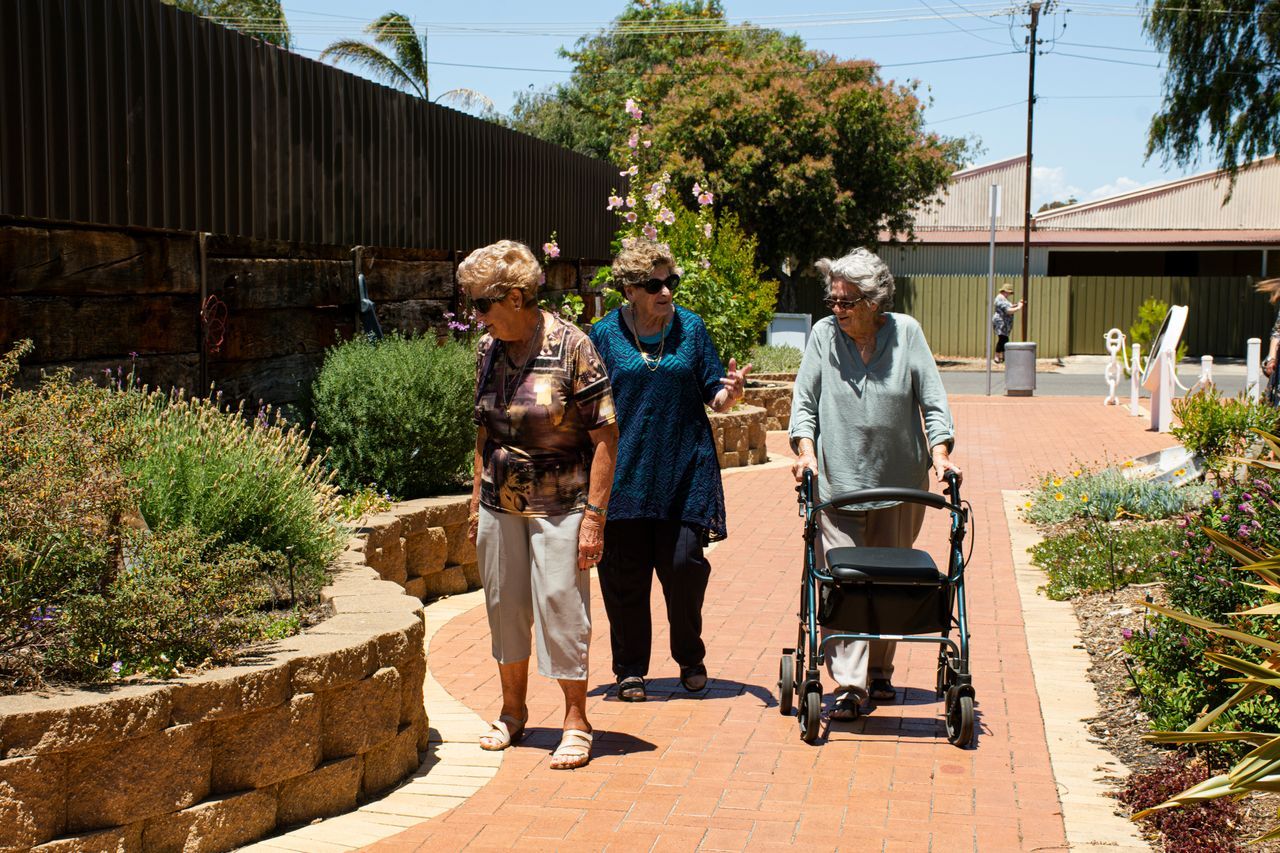
Walking groups, cycling clubs, gentle fitness classes, tai chi, yoga with the same weekly group. Physical activity in company works well for retirees because side-by-side activity reduces social self-consciousness, creates natural conversation rhythm, and involves no performance pressure. You are doing something together that does not require sustained face-to-face interaction.
For deeper guidance on which hobbies genuinely produce social connection rather than just filling time, that guide covers the selection criteria in more detail.
Digital Starting Points
Meetup, Nextdoor, Facebook local groups, and community noticeboards are useful as discovery tools, ways to find out what exists near you, rather than as social destinations in themselves. Online interaction can lower the barrier to attending something in person, but friendship forms in person, through repeated physical presence.
Use digital platforms to find the regular commitment that works for you. Then attend consistently enough to become a familiar face. The online stage is research, not the relationship itself.
The Singles Dimension
Much advice about making friends in retirement assumes a partner at home, someone who provides baseline company and often acts as a social bridge to other couples, dinner invitations, and shared activities. When you are single, that buffer does not exist. The social contraction is more complete, and the rebuilding is entirely self-initiated.
This is not a disadvantage in all respects. Single retirees often have more scheduling freedom and less obligation to balance a partner’s preferences. But it does mean that the gap between “no structured social contact” and “some regular human connection” falls entirely on your own initiative. There is no one else generating invitations or maintaining shared friendships on your behalf.
If companionship is what you are looking for rather than romance specifically, friendship-building and companionship-seeking often share the same practical path: regular presence in a shared setting, sustained over months. One frequently leads to the other, or becomes sufficient on its own terms. If you are also considering dating alongside friendship-building, the guide to dating after retirement covers how to balance both without letting one overwhelm the other.
For those who feel that social confidence itself has eroded after a long period alone, that is a separate and addressable concern. It does not mean you are unready — it means the re-entry takes slightly more deliberate pacing.
How Long This Actually Takes
The honest answer is months, not weeks. The research on adult friendship formation suggests 50+ hours of accumulated shared time before someone moves from acquaintance to casual friend. At one group meeting per week, that is roughly three months of consistent attendance before relationships start to feel natural rather than effortful.
This timeline surprises most people because workplace friendships developed invisibly over years. You never noticed the accumulation because it happened inside a schedule you were attending anyway. In retirement, the same process requires deliberate attendance, and the pace feels slow because you are watching it happen.
Two practical implications:
First, do not evaluate whether something is “working” after two or three sessions. The first month of any new group feels awkward for almost everyone. That discomfort is a stage, not a verdict. If you are in that window and considering stopping, the guide to keeping showing up when a new routine feels awkward covers what the early weeks actually feel like and how to endure them.
Second, one consistent commitment sustained over several months produces more connection than several different activities attended sporadically. Depth comes from repetition with the same people, not breadth across many settings.
Frequently Asked Questions
Why is it so hard to make friends after you retire?
Because work provided the structural conditions for friendship — repeated proximity, shared context, low-effort contact — automatically. Without that structure, every social interaction requires deliberate initiation and planning. The difficulty is structural, not personal. Most retirees find friendship-building harder than expected because they are noticing the absence of a system they never had to think about while it was running.
How do you meet people when you live alone and are retired?
Through any recurring, structured activity that puts you alongside the same people weekly: a class, a volunteer shift, a walking group, a community organisation. The specific activity matters less than three qualities — regular schedule, stable membership, and a shared purpose beyond socialising. Start with one commitment and attend consistently for at least two months before assessing whether it is producing connection.
Is it normal to feel lonely after retirement even with family nearby?
Yes. Family relationships and friendships serve different social functions. Family provides support and continuity, but not the peer-level companionship, novelty, and chosen connection that friendships offer. Many retirees feel lonely despite regular family contact because the gap is specifically in elective social connection — people who are in your life by mutual choice rather than obligation.
How long does it take to build real friendships in retirement?
Typically three to six months of consistent weekly attendance at a shared activity before connections begin to feel natural. Genuine friendship — the kind where someone calls you to suggest a walk or invites you to something on a weekend — usually takes longer, often a year or more of accumulated contact. The pace is gradual and cannot be meaningfully compressed.
How do introverts make friends after retirement?
Through side-by-side activities rather than face-to-face social settings. Walking groups, gardening, pottery, cycling, and volunteering with a practical task all allow connection to develop through shared activity without requiring sustained conversation or social performance. Small groups under 12 people with a fixed focus suit introverts better than large, open-ended social events. The key is low-pressure repetition, not high-energy socialising.
You do not need to replace your entire work social life at once. You need one regular commitment — one group, one class, one shift — sustained long enough for familiarity to build. That is where most post-retirement friendships begin: not in a dramatic decision to be more social, but in the quiet accumulation of showing up to the same place, with the same people, week after week, until the faces become familiar and the conversations become real.