Editorial note: This guide draws on conversations with readers over 50 who have searched for travel companions through platforms, group trips, and social circles, and on their observations about what worked and what went wrong. A 2024 study in the International Journal of Psychology found that trust between strangers builds through graduated reciprocal self-disclosure — taking turns sharing increasingly personal information — rather than through time alone. This supports what readers consistently describe: you learn more about a potential travel companion from two honest conversations than from six months of surface-level messaging. AARP’s 2026 Travel Trends Survey found that adults over 50 average four trips per year. We are not affiliated with any travel platform or matching service mentioned here.
The hardest part of senior singles travel is not finding someone to go with. Platforms exist. Group trips exist. People in your walking group or book club have mentioned wanting to travel. The names are not the problem.
The problem is the gap between “this person seems nice” and “I trust this person enough to share a hotel room in a foreign city for seven days.” That gap is where most travel companion plans quietly die. Not because the right person does not exist, but because committing to that level of proximity with someone you do not fully know carries a specific fear: what if it goes wrong and you are stuck?
That fear deserves respect. It is not overthinking. It is the reasonable caution of someone who understands that a badly matched travel companion can ruin not just a holiday but the friendship underneath it. This guide is about how to cross that gap deliberately, using graduated steps that let you learn what you need to know before the stakes get high. If you are still deciding whether you want a companion at all versus traveling solo or joining a group, the broader guide to travel for singles over 50 covers that decision first.
Where Travel Companions Come From
Most people find potential travel companions through one of three channels. Each produces a different starting trust level:
Group trips you have already taken. The strongest foundation. You have already seen how this person handles airports, group meals, schedule disruptions, and fatigue. You know their pace. The guide to travel groups for singles over 50 explains these formats. If you met someone compatible on a group trip, you are already past the hardest filter — you have observed them under travel conditions rather than imagining how they might behave.
Shared-interest groups and activities. Walking groups, U3A branches, Ramblers, community classes. You know someone’s weekly rhythm and temperament, but you have not seen them under travel pressure. The trust is real but untested under the specific conditions that matter.
“I met Diane at a watercolour class in Harrogate,” a 61-year-old reader told us. “We got along brilliantly for two years of Thursday mornings. Then we did a painting weekend in Whitby together and I discovered she needs to talk from 7am to 11pm without pause. I did not know that about her because our class was only two hours. The weekend taught me something two years of Thursdays never could.”
Online platforms and matching services. SeniorMatch, GAFFL, Stitch, Facebook travel groups, Meetup. These expand your pool significantly but produce the lowest starting trust level. You are working from a profile and messages, not from observed behaviour. The vetting process matters most here.
I would not dismiss any of these channels, but I would spend different amounts of evaluation energy depending on which one produced the candidate. A companion from channel one may only need one honest conversation. A companion from channel three needs the full process below.
The Three-Coffee Rule
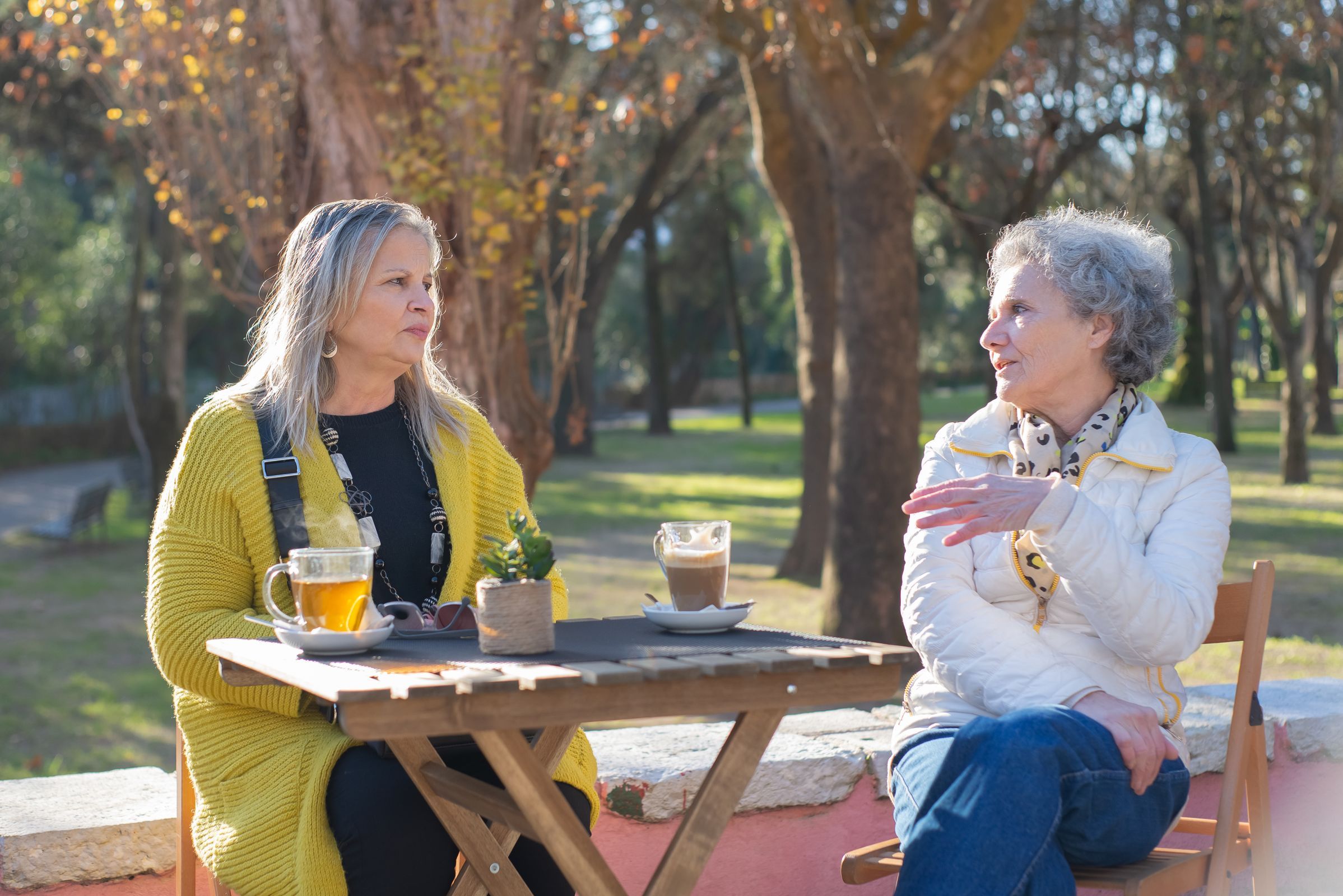
Before you agree to any trip longer than a day, have three separate conversations with your potential companion. Not three text exchanges. Three proper face-to-face meetings (or video calls if geography demands it). Each has a different purpose, and spacing them over two to three weeks gives you time to notice how you feel between meetings — whether you look forward to the next one, or whether a faint unease has crept in.
Coffee one: general chemistry. This is not an interview. It is a vibe check. Do you enjoy this person’s company in a low-stakes setting? Does the conversation flow, or does it feel effortful? Do they listen, or primarily broadcast? Notice the ratio of talking to asking. Notice whether they are curious about your preferences or only describe their own. If this coffee feels like work, the trip will feel like a sentence.
Coffee two: the practical conversation. This is where most people skip to too quickly or avoid entirely. Discuss: budget range (not vague “mid-range” but actual numbers — “I’m comfortable spending £100 a night on accommodation, not £200”), daily pace (early riser or late starter?), alone-time needs (how many hours per day do you each need without the other person?), physical limitations (walking distance, stairs, heat tolerance), and food preferences. If your budgets differ by more than 30%, that will create friction every single day. Better to know now.
Coffee three: the honest conversation. Discuss dealbreakers and exit plans. What happens if one person is miserable and wants to come home early? Who pays for the change? What behaviour would make you end the trip? Is either of you hoping this trip becomes romantic, and if so, does the other person know that? This conversation feels awkward to have over coffee. It will feel catastrophic to have on day four of a trip in Portugal. The awkwardness now buys you clarity later.
The reason this works is not magic. Research on trust formation shows that trust builds through reciprocal self-disclosure — taking turns sharing progressively more personal information. Each coffee escalates the intimacy of what you discuss. By the third meeting, you have exchanged enough real information to make a genuine decision rather than hoping for the best based on surface pleasantness.
If someone resists the third conversation — says “let’s just see how it goes” or “you’re overthinking this” — that resistance is information. It may mean they are uncomfortable with directness, which is a legitimate temperament difference. Or it may mean they do not want you to have enough information to say no. Either way, you have learned something useful.
The Trial Trip
The three-coffee rule tells you whether someone is worth traveling with in theory. A trial trip tells you in practice. The difference is significant, and it works in one direction only: a good conversation cannot predict travel compatibility, but a short trip can reveal incompatibility that no conversation would surface.
I would recommend a day trip or a single overnight as the trial format. Not a full weekend — that is too long for a test and too short for a real trip. A single Saturday (a day trip or walking group outing together) gives you 6 to 8 hours of continuous proximity. An overnight adds the evening: shared dinner, the negotiation of morning routines, the moment when one person wants to keep talking and the other wants to read in bed.
What you are testing is not whether you enjoy each other’s company. You already established that over coffee. What you are testing is how your bodies coexist in space for an extended period. Whether their pace genuinely matches yours or whether one of you is always waiting. Whether their approach to decisions (spontaneous vs. planned) complements yours or creates friction. Whether silence between you feels comfortable or tense.
“We did a day walk on the South Downs before our actual trip,” a 58-year-old reader from Brighton told us. “About four hours in, I noticed she was making passive-aggressive comments every time I wanted to stop and take a photograph. Nothing dramatic — just a sigh, or ‘another one?’ with a little laugh. On a day trip I could ignore it. Over seven days in Andalusia it would have driven me to the edge. I suggested we stay friends at our Tuesday class instead, and she actually seemed relieved.”
That reader’s experience illustrates something important: the trial trip is not a pass/fail exam for the other person. It is a mutual compatibility test. The photographer and the non-stop-walker are not wrong for each other in life — they are wrong for each other as travel companions. The trial trip makes that visible at low cost instead of high cost.
If the trial goes well, book the real trip. If it produces mild doubts, try one more short trip before committing. If it surfaces clear incompatibility, you have spent £30 to £50 and a Saturday, not £1,500 and a week. That arithmetic is the entire point.
The Money Conversation
Budget mismatches ruin more travel companionships than personality differences. The reason is structural: budget affects every decision, every day. Where you eat, where you sleep, how you travel between places, whether you visit paid attractions, whether you can afford a taxi when you are tired. A personality difference might surface occasionally. A budget gap surfaces at breakfast, at lunch, at check-in, at dinner, and at the bar afterward.
The conversation most people have is too vague: “I’m fairly budget-conscious” or “I like comfortable but not luxury.” These phrases mean different things to different people. Someone’s “budget-conscious” is £60 per night for accommodation. Someone else’s is £120. Over seven nights, that difference costs one person £420 more than they planned.
I would suggest discussing three specific numbers before anything is booked:
Nightly accommodation budget. Not a range — an actual figure each person is comfortable paying per night. If the gap is more than 40%, you either need separate rooms at different price points (which is fine and underrated) or you are not budget-compatible for this trip.
Daily spending beyond accommodation. Food, transport, activities, drinks. Again, a number. “About £50 to £70 a day on everything else” is specific enough. “Whatever feels right” is not.
The contingency question. If one person wants to do something expensive the other does not (a £40 museum, a £90 restaurant, a £15 taxi instead of a bus), how do you handle it? The cleanest answer: each person can opt in or out of any non-shared cost without guilt or explanation. But that answer needs to be spoken aloud before it can function.
Readers who travel successfully with companions report that the money conversation is uncomfortable for about fifteen minutes and then saves days of accumulated resentment. The ones who skip it describe a slow poisoning of the trip where every restaurant choice becomes a silent negotiation.
Boundaries That Protect the Friendship
Boundaries are easier to set before a trip than during one. Once you are sharing a Lisbon apartment, requesting alone-time feels like rejection. Before you book, it is simply planning.
The conversations that matter most:
Alone-time. How many hours per day does each person need without the other? Some people thrive on constant companionship. Others need two hours alone after lunch to read, nap, or simply be quiet. Neither preference is wrong, but if they are not discussed in advance, the person who needs solitude will feel suffocated and the person who needs company will feel abandoned. A concrete agreement (“we do mornings separately and meet for lunch”) works better than a vague “we’ll play it by ear.”
Pace and energy. Are you a seven-museum-day person or a two-museums-and-a-long-lunch person? Does one of you walk faster, stay up later, wake earlier? These differences become daily friction unless both people explicitly agree to flex. The most sustainable approach readers describe: plan one shared activity per day and leave the rest unstructured. That gives each person autonomy without sacrificing the reason you are traveling together.
Sleeping arrangements. If you are sharing a room to save money, discuss habits: light sleeper or heavy? Read in bed or lights off at 10? Snoring? Bathroom routine length in the morning? These details sound trivial but they compound over days. Several readers told us they prefer separate rooms even at higher cost because the quality of the companionship during the day is better when both people slept well.
The “I need a night off” clause. Agree in advance that either person can take an evening alone without it being interpreted as a problem. “I’m going to have dinner on my own tonight” should be as unremarkable as “I’m going for a walk.” If that sentence cannot be said without guilt or offence, the companionship is too fragile for a full trip.
What to Do If It Stops Working Mid-Trip
This is the section most travel companion articles omit entirely, and it is the one that matters most for readers whose primary fear is being trapped.
The realistic scenario is not a dramatic blowup. It is a slow accumulation of friction that makes each day slightly worse than the last. One person talks too much at breakfast. The other always takes too long getting ready. Small irritations that would be invisible at home become inescapable when you share every meal and every walk.
First, normalise early honesty. If something is bothering you by day two, say it by day three. Not as a confrontation — as an observation. “I’ve noticed I’m getting a bit overwhelmed by how much togetherness we have. Could we try separate mornings tomorrow?” Most reasonable adults will respond to that. The companionships that fail are the ones where both people silently endure until resentment explodes on day six.
Second, have a pre-agreed exit plan. Before you leave home, decide: if one person wants to leave early, what happens? Practically: who absorbs the cost of changed flights or cancelled accommodation? The fairest default is that the person who leaves pays their own change costs and forfeits their share of prepaid accommodation. Having this agreed in advance means nobody needs to negotiate while upset.
Third, separate is not failed. If you reach a point where splitting up for the remainder of the trip would save the friendship, that is a success, not a failure. “We did four days together and three apart, and we’re still friends” is a better outcome than “we endured seven days and haven’t spoken since.” Give yourself permission to adapt the plan mid-trip without treating adaptation as defeat.
Frequently Asked Questions
Is it safe to travel with someone you met online after 50?
It can be, with proper vetting. Meet in person at least three times before committing to a trip (the three-coffee rule). Tell a friend or family member who you are traveling with and share your itinerary. Start with a day trip or single overnight before a longer trip. Trust your discomfort if something feels off during the evaluation stage. The platforms themselves (SeniorMatch, Stitch, GAFFL) provide a starting point, but they do not replace your own assessment of the person.
How do you know if someone is a good travel companion before you go?
You cannot know with certainty, which is why trial trips exist. The three signals that matter most: compatible budget (discussed with real numbers, not vague ranges), compatible pace (observed during a shared day out, not just described in conversation), and the ability to have uncomfortable conversations directly. If you can discuss dealbreakers and exit plans without the other person becoming defensive, that directness will serve you well on the trip itself.
How do you split costs fairly with a new travel companion?
Discuss specific numbers before booking: nightly accommodation budget, daily spending target, and how to handle optional expenses one person wants and the other does not. The simplest workable system: split shared costs 50/50 (accommodation, shared meals, shared transport) and keep individual spending entirely separate. Use a shared expense app (Splitwise or Tricount) to track shared costs transparently. Settle up weekly during the trip, not at the end.
What should you discuss before traveling with someone new?
Budget (specific numbers), daily pace and energy levels, alone-time needs, sleeping habits if sharing a room, physical limitations, what happens if one person wants to leave early, and whether either person has romantic expectations. Readers who skip these conversations consistently report that the trip surfaced problems they could have identified in advance.
How long should you know someone before traveling together?
Time matters less than quality of information exchanged. Two months of honest conversations and one shared day trip gives you more relevant data than two years of weekly classes where you only see someone’s social face. The milestone is not a calendar date — it is whether you have completed the three evaluation conversations and one trial experience.
Choosing Carefully Is Not Choosing Fearfully
If you have read this far and feel more cautious rather than more excited, that is not a problem. Caution in this context is just clarity about what you need before you commit. The three-coffee rule, the trial trip, the money conversation, the boundary agreements — none of these are barriers to travel. They are the things that make travel with another person sustainable rather than survivable.
Some readers will complete this process and discover they prefer traveling alone after all. That is a perfectly good conclusion. Knowing you prefer your own company removes the vague guilt of “maybe I should find someone,” and lets you plan solo trips without the nagging sense that you are settling for less.
Others will find that the vetting process itself deepens the relationship. Having the awkward conversations, surviving the trial trip, negotiating honestly about money — these are acts of trust-building. By the time you board the flight together, you are not hoping it will work. You have evidence that it can.